
What We See on Service Calls Once the First Cold Snap Hits
Every year it's the same pattern. The first real freeze comes through south of Madison, and the calls start rolling in: a door that groans and jerks instead of gliding, an opener that strains and reverses halfway up, or a door that simply won't budge at all on a sub-zero morning. Nine times out of ten, the problem wasn't a surprise. It was a door that went into winter already a little stiff, a little misaligned, or running on grease that was never meant for cold weather. None of it is dramatic to fix in October. It gets expensive and inconvenient in January.
Start With the Weatherstripping
The rubber seal along the bottom of the door and the vinyl strips on the sides are your first line of defense against wind-driven snow and meltwater. By this time of year, most seals in this area have taken a beating from a humid summer and UV exposure. Look for cracking, flattening, or gaps where daylight shows through. A worn bottom seal doesn't just let in cold air — it lets in slush and road grime that can freeze the door to the slab overnight. Replacement seal is inexpensive and takes less than an hour, and it's one of the few jobs a handy homeowner can do without special tools.
Lubricate Before the Grease Thickens
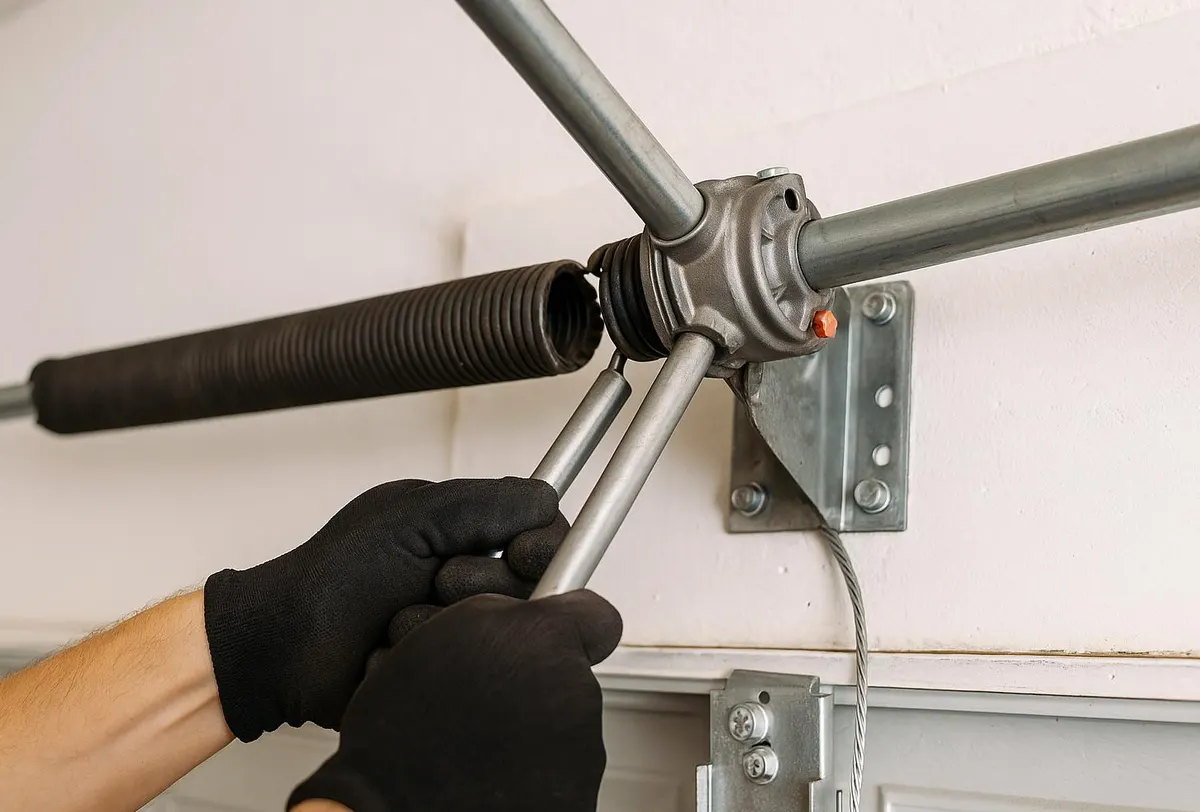
Standard grease and old, gummed-up lubricant thicken as temperatures drop, which adds resistance right when your opener and springs need to work the least. Hinges, rollers, and the torsion spring itself should get a silicone-based or lithium-based garage door lubricant rated for cold weather, not household oil or WD-40, which attracts dust and grit and wears off fast. Spray it on hinges, roller bearings, and the spring coils themselves, then run the door up and down a few times to work it in. Do this now, while it's still above freezing and the lubricant can actually penetrate, instead of trying to do it on a 10-degree morning when everything is stiff.
Check Spring Tension While It's Still Mild
Cold metal contracts, and torsion springs are no exception. A spring that's barely holding on in October is a strong candidate for snapping in the middle of a January cold snap, often on the exact day you need the door most. Watch for a door that feels heavier than usual when lifted manually, or an opener motor that sounds like it's working harder than it used to. These are classic signs a spring is near the end of its life. Spring replacement is not a DIY job — the tension involved can cause serious injury — but having it checked and replaced before winter beats an emergency call during an ice storm.
Garage Interior and Door Panels
If your garage is attached to the house, an underinsulated door means cold air pushing straight into that space, and in homes around here that often means a chillier mudroom or laundry area all winter. Check door panels for dents or warping that could be letting in drafts, and make sure any insulation kit or insulated door panels are still seated correctly. This matters more in this climate than in milder regions, since a Wisconsin winter doesn't let up for a few weeks — it settles in for months.
Test the Opener, Sensors, and Battery Backup
Cold weather is hard on electronics and batteries alike. Wipe down the safety sensors at the bottom of the tracks, since condensation and road salt residue kicked up by passing vehicles can coat the lenses and cause false reversals. If your opener has a battery backup, test it now — winter storms in this area regularly knock out power, and you don't want to discover a dead backup battery during an outage with a driveway full of snow. Replace openers' remote batteries while you're at it; cold drains them faster than you'd expect.
Protect Against Road Salt and Winter Grime
Vehicles tracking in road salt and sand all winter will slowly corrode tracks, rollers, and the bottom of steel panels if left unchecked. A quick hose-down of the lower door and tracks on milder days, followed by a wipe-down and reapplication of lubricant where needed, keeps corrosion from setting in. It's a five-minute habit that pays off when spring thaw turns the driveway into mud and you still need the door opening smoothly.
Do a Balance Test Before the Snow Flies
Disconnect the opener by pulling the release cord, then lift the door halfway by hand. A properly balanced door stays put; one that slides down or shoots up means the spring tension is off and the opener is compensating — something that gets worse, not better, as temperatures drop. This is a good final check before you stop thinking about the garage door until spring.
When to Call Brooklyn Garage Door Pro
If your balance test fails, if the spring looks stretched or shows a visible gap in its coils, or if the opener is straining and reversing on its own, it's time to call us rather than keep adjusting things yourself. We handle spring replacement and garage door opener repair throughout Brooklyn and nearby communities like Oregon, Stoughton, and Verona, and a pre-winter visit usually means a full inspection of springs, cables, rollers, and the opener's force settings, along with fresh lubrication suited for cold weather. Catching a weak spring or a failing sensor now is a lot simpler than an emergency call during a February whiteout.
If your garage door has been fighting you since the weather turned, don't wait for the first real freeze to force the issue. Call Brooklyn Garage Door Pro today and get your door checked, adjusted, and ready for whatever this Wisconsin winter brings.